

What I've been creating
Let's not aim for perfect
Welcome to 2026?
I didn’t feel particularly ready for it, given that I felt very behind on writing, reading, and my DIY projects at the end of 2025. I have barely done any knitting or crocheting in months. The chapter I was scheduled to finish, wasn’t. And I still have lots of curtains to make….
But, I still took a solid two weeks off over the Christmas break, which I really needed as it turns out. I hosted friends I hadn’t seen in months (sometimes years), ate a lot of sugar (and other food), took a break from the gym, spent time with my kid, and hibernated at home.
Which led to the first couple of weeks of January being super productive.
One of things I did, dear reader, is revamp the look of the newsletter. I spent some time thinking about what I really want to write about and what it should look and feel like. I decided that what I like doing is creating things. Whether that’s large engineering projects, knitted jumpers, or books. So I will test this format out for a bit, and would love your feedback.
So let’s talk curtains. I bought some luxurious fabric to make curtains for my living room (you may have seen the before and after pictures in my last newsletter). For better or worse, I chose eyelets on a rod. To make sure the top of the curtains stand clean and proud, I added in what’s called buckram — a stiff iron-on fabric — into the top hem. It’s not unlike the steel plates structural engineers add to columns or beams along areas which are carrying a lot of weight and need openings.
But, the buckram has made cutting out the holes to put the eyelets in, let’s say, $%£&* excruciating. (I will be taking these to a local tailor to sort out.)
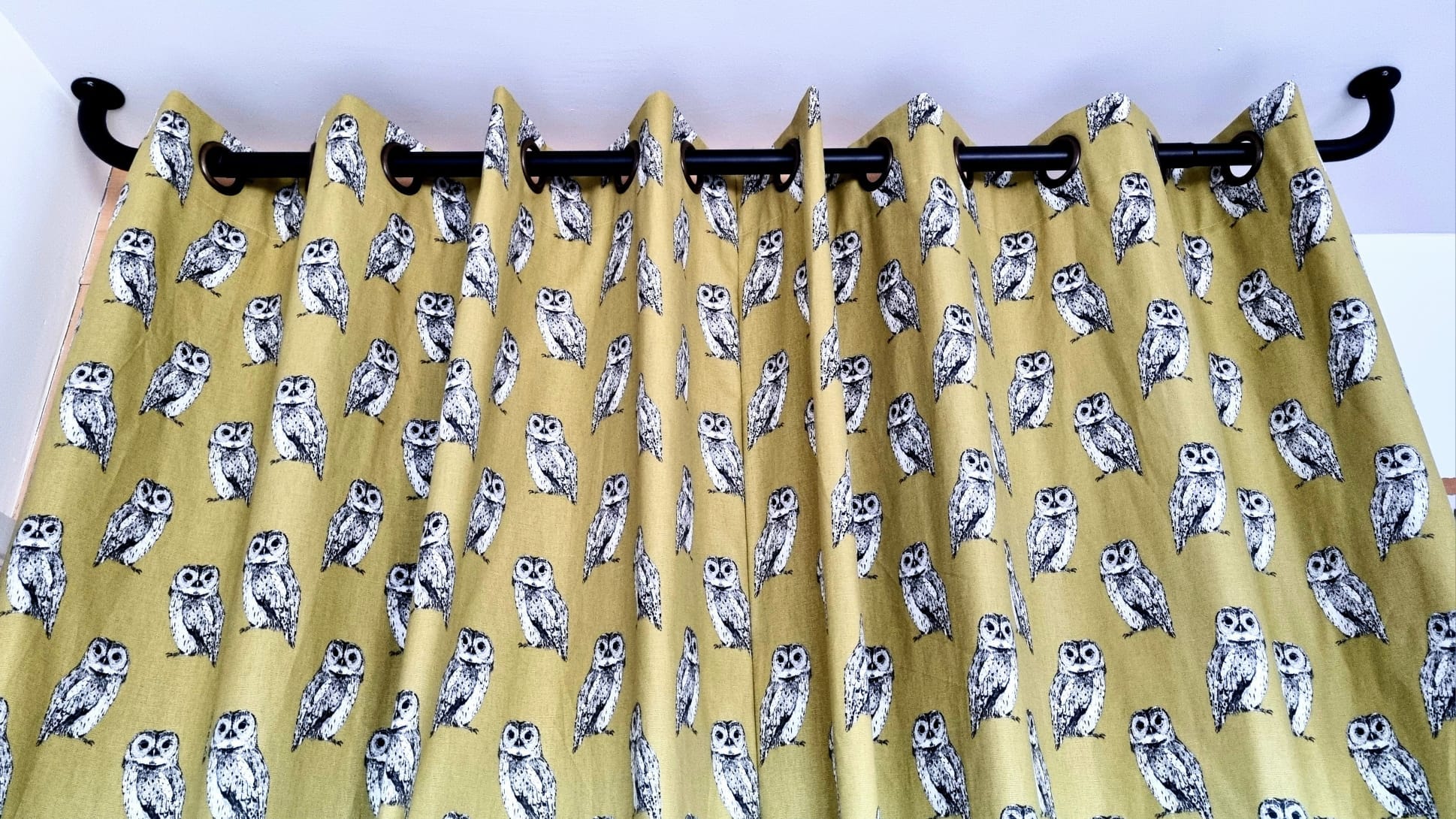
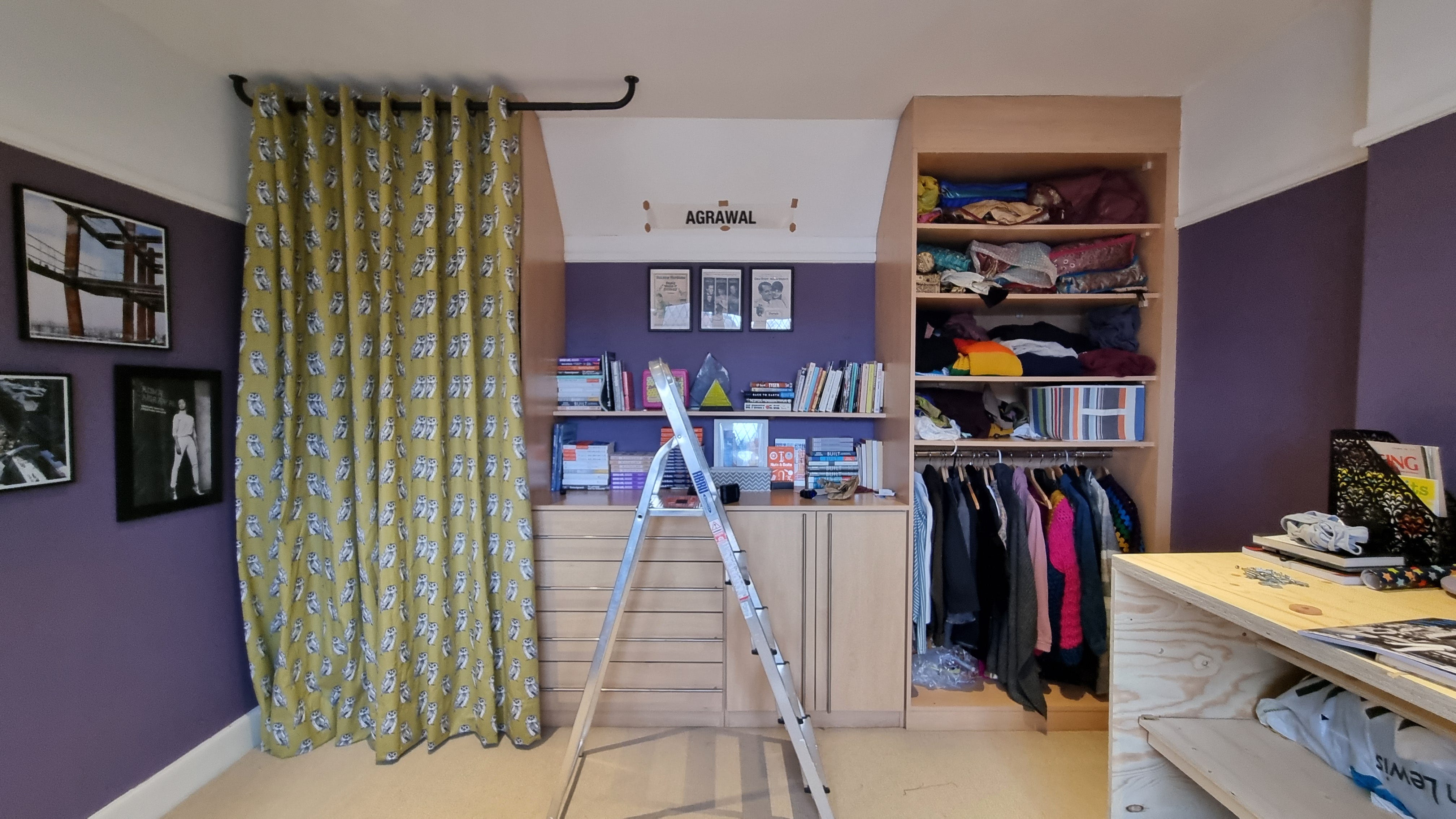
On the other hand, for my office, which I’ve painted a deep bluey purple, I wanted an informal look. Enter my owls. Mustard contrasts nicely with the walls, and the owls make me smile. The buckram has been left out.
Which leads to my point about perfection.
The curtains I’ve made to replace my wardrobe doors touch the floor on one side, and sit above it at the other. The fabric is holding up well at the top, but the rod I purchased based on measurements didn’t say that the finials (brackets that connect to the wall / ceiling) weren’t included in that measurement…. so the rod is much wider than the wardrobe. I now have a second one to make, and forgot to note the measurements for hems and such like. Installing the brackets led to a shower of dust from my aged ceiling, and doubts about the robustness of the connection.
Oh well.
They do the job I want them to. As I keep telling my daughter, it’s good enough.
And maybe someday I’ll chuckle about the extra long curtain rod, but this month, it’s still too soon…
I’d love to know what you’ve been creating in your worlds? Where are the areas of your life where you’re letting go of perfection?
Please do share in the comments, I look forward to hearing.
And I’ll leave you with a spread from my last children’s book, Seven Small Inventions that Changed the World. I have a new one out very soon, more next month!

As in the thread with Devin, you only really learn by doing it differently. If you are restrained too much by fear of change or over-criticised for making mistakes, then there is no long term benefit. But it's sometimes difficult to accept thua and be open about it to others. Hence part of the reason for my post today on Substack.
Although I create in different ways (I like to do (amateur) woodworking projects mostly), I can totally relate to the disappointment of the realization that your plan isn’t working out, but also the peace it gives to let go of the perfection. To step back, look at what you’ve created, and see that it still functions, that the heart and effort behind it were uniquely yours, and that usually nobody knows the difference except for you! I recently made a couple of display boards for my dad for Christmas (finished and delivered them to him a couple days ago because…procrastination), and when I ran the first one of the 2 boards through the CNC mill, I noticed my piece bowed upward so it affected the depth of the cuts. I had the same bow in the second board, so I planed it before running it through the mill. This one looked more consistent, but side-by-side, these boards are sort of noticeably different. But after finishing them and seeing the final product, my dad (who is a great woodworker) was really impressed with them, even with the imperfections! And when I looked at them, I had to force myself to be proud of the creation and it actually worked! Allowing the room for error is much more fulfilling to a satisfied project and for improvements on the next one. Your office looks great! (Sorry for the long comment; I’d have attached pictures of the boards instead of explaining if I was able to do that in these comments lol)